
There are four types of SEO: on-page, off-page, technical, and local. The four are one job seen from four angles, and once I could tell them apart I could read a proposal and spot what was missing.
The Four Types of SEO at a Glance
On-page SEO is what you put on the page: the words, the headings, the title that tells Google what you do. Off-page SEO is what other people say about you: links from other sites, mentions, reviews. Technical SEO is the plumbing: how fast the site loads, whether Google can read it at all. Local SEO is the neighborhood layer: the card that pops up when someone nearby searches for what you do.
The four are angles on the same question: does Google understand your business, trust it, and know where you are? Understanding comes first, and it starts with what you put on the page.
On-Page SEO
On-page SEO is everything you control on your own site: the words on each page, the title that shows up in search results, the headers that organize your content, and the way you describe your images.
Google reads your pages to figure out what you do and who you serve. On-page SEO is how you answer that question clearly, in the right places, so there is no guessing.
So: write pages that say what you do, name the city or neighborhood you serve, use plain language a customer would type, and give each page one clear purpose.
Most of that you can do yourself, which is Google’s own position: a small local business owner can probably handle much of this work without hiring anyone (Google). An afternoon rewriting your service pages in the words your customers use is real progress & it costs you nothing but the afternoon. What you can’t write yourself is your reputation, what other people say about you.
Off-Page SEO
That reputation is off-page SEO: everything that happens away from your site that still affects how Google ranks you. It builds up over time, by other people and platforms.
The clearest example is a backlink: when another website links to yours, Google reads it as a vote of confidence. The more credible the site pointing at you, the more weight that vote carries. A local news outlet mentioning your business, or a trusted industry directory listing your name, both count.
Backlinks get the most attention, and the rest of the picture matters too: brand mentions, reviews on third-party sites, and how often people search for your name all feed into what Google concludes about your credibility.
You earn this angle. Do good work, get listed in the right places, and give people something worth linking to. None of it counts if Google can’t read the site in the first place.
Technical SEO
Whether Google can read the site is technical SEO, the infrastructure layer: the work that makes sure Google can find, read, and index your site before anything else matters.
You can write the best page on the internet about your service, and if the site loads slowly, breaks on a phone, or has a crawl error blocking that page, Google may not surface it at all.
What falls under technical SEO: site speed, mobile-friendliness, clean URL structure, proper redirects, and a sitemap that tells Google what to look at. It all runs out of sight, and it decides whether your customers ever find you.
Technical SEO comes first: on-page, off-page, and local all sit on top of it. For most businesses reading this, the layer that sits closest on top is the neighborhood one.
Local SEO
That neighborhood layer is local SEO, the angle that connects your business to people searching nearby. When someone types “plumber near me” or “best tacos in Clayton,” Google runs a different kind of calculation: it weighs proximity and trust alongside relevance. Your Google Business Profile is the card that shows up beside the map. That card, your address matching everywhere online, and what past customers have said about you all feed the calculation.
If you serve people in a specific place, this is the angle where your own hours pay off first. A restaurant, a law office, a home-services contractor, a boutique, a clinic. Any business where the customer’s location matters. I’ve walked through getting that card into shape step by step, and it’s the highest-return hour I’ve seen an owner spend.
If you sell nationally or run a fully remote service with no geographic tie, local SEO moves down the list. Most small-business owners reading this have a place customers can drive to, so once the technical floor holds, put your hours into the local layer before anything else.
How to Read an SEO Proposal Using the Four Types
Once your own hours are placed, the four types also give you a fast way to read a proposal when one lands in your inbox.
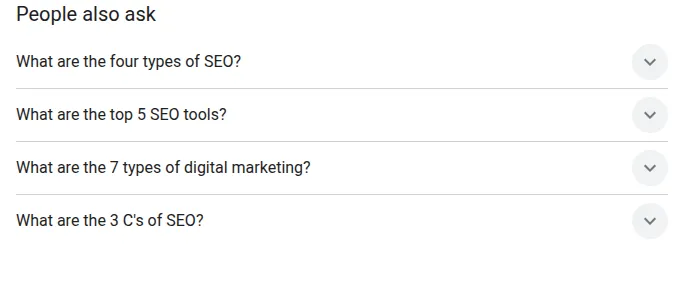
The real results page for “types of seo”, captured the day this was written. The first question in the box is the one this post answers, & the vendors writing proposals know people are asking it. Source: Google search results.
Run through the list: does the scope mention your page content and keywords? Your site’s speed and structure? Links and mentions from other sites? Your Google Business Profile and local listings? If a vendor covers only one or two of those angles and calls it a complete SEO plan, you are looking at a proposal with a hole in it.
The price column matters too. SEO runs about $2,900 a month on average (Ahrefs), and about 1 in 4 providers charge between $500 and $1,000 (Ahrefs). A low number can be honest work at a narrow scope, priced fairly. A low number with no explanation of what the scope leaves out is the one to ask about. I’ve broken down what SEO costs and what each price band usually buys.

The survey behind those price figures, with the poll size in the title. Source: ahrefs.com.
One more thing worth knowing while you read: it costs nothing to appear in Google’s organic results (Google), so you are paying a vendor for work and never for the placement itself. Any proposal that blurs that line deserves a harder look.
What Legitimate SEO Can and Cannot Promise
The hardest look goes to the promise. No one can promise you a first-page ranking: Google’s own guide says it never accepts money to include or rank sites in organic results, and that advertising with Google won’t affect your presence there (Google). A vendor who guarantees a rank is selling past that line.
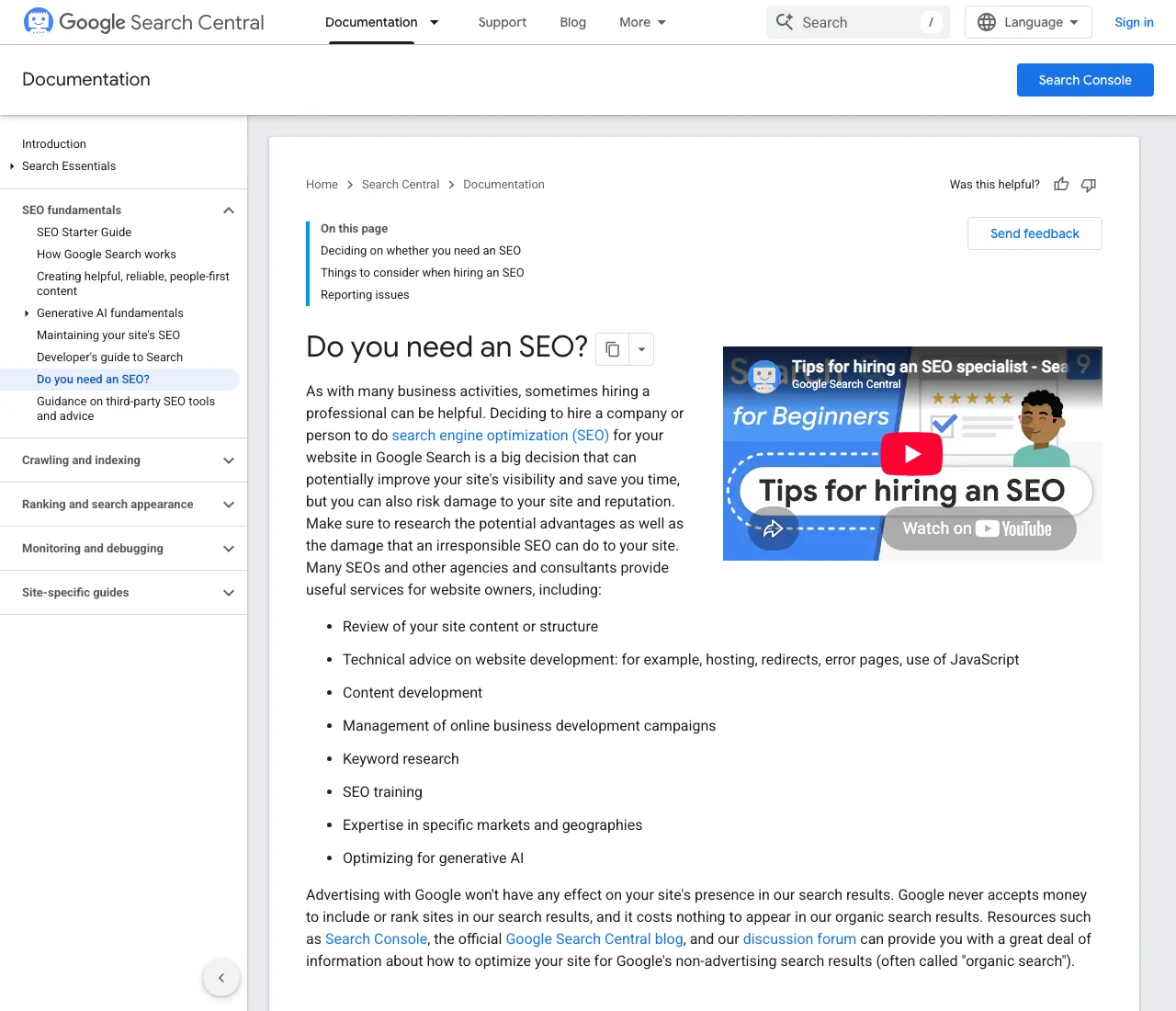
Google’s own hiring guide, with the list of what a legitimate SEO does. Every angle in this post appears in that list. Source: developers.google.com.
What honest SEO work can deliver: better-structured pages, a cleaner technical foundation, a profile Google trusts, and listings that back up your reputation over time. Those things work, and the schedule is Google’s.
I’d walk away if the pitch includes a guaranteed rank, a promise of overnight results, or vague talk about “proprietary methods.” The same goes for a pitch that opens by telling you SEO is dead, because that line usually introduces a more expensive package.
If you’d like a second set of eyes before you sign anything, book a consultation: $125 for the hour. We’ll walk your site through all four angles together, and you leave with the list whether or not you hire me afterward. The St. Louis SEO work I do starts from the same list.
I hope this helps.