
SEO is alive & still deciding who shows up. Google’s AI answers run on the same ranking systems that decided who showed up before those answers existed, so the SEO work still counts (Google). What changed is which “wins you can count on.”
What Do People Mean When They Ask If SEO Is Dead
The wins people count first are clicks, so the question usually starts with a dip in traffic. Someone opens their analytics, sees fewer visits than last year, and asks the natural thing: did SEO stop working?
Google’s AI Overviews now answer plenty of questions right on the results page, so a search that used to send someone to your site can end before they ever get there.
The louder version of the worry comes from marketers reacting to that shift with something closer to a sales pitch. “SEO is dead” travels fast because it creates urgency & conveniently opens a door to whatever solution proposed next.
Google’s hiring guide says it costs nothing to appear in organic search results and that Google never accepts payment to influence those rankings (Google). That doesn’t change the fact that the basics of SEO are still relevant w/ gaining impressions & digital visibility. The clicks moved, which is a real problem worth solving, and it’s a different problem from SEO being “dead”.
What AI Overviews Are Doing to Organic Clicks
AI Overviews do take clicks, and they take more of them from some searches than others.
The ones most affected are the simple searches: a quick definition, a fast how-to, a question with one clean answer. Google puts a generated summary at the top, the reader gets what they came for, and they rarely scroll down to the blue links.
The searches that bring customers to a local business behave differently. Someone looking for a plumber in their neighborhood, a shop that carries a specific part, a dentist with a same-week opening. Those still end in a click, because the AI can name you & it still can’t call the number for you.
So the goal widens to being the business the AI names when someone is ready to act. The foundation underneath it holds, since Google says its generative AI features are rooted in the core Search ranking and quality systems (Google). I went further into what the AI layer is doing to the job itself in will AI replace SEO.
Why Google’s Own Docs Prove SEO Still Matters
Google’s documentation is direct about that job. The generative AI features, AI Overviews included, don’t run on a separate system with separate rules; they’re rooted in the core ranking and quality systems that already decide who shows up (Google). A page also has to be indexed and eligible to appear with a snippet before it can show up in those AI features at all (Google).
That leaves the fundamentals carrying the same weight they carried before: site structure, content quality, relevance to the search, trust signals. Even though the door moved, the lock is the one you already have a key to.
Google also says it never accepts money to include or rank sites in organic results, and that advertising with Google has no effect on your presence there (Google). Organic placement is earned, and the AI layer left the price of admission where it was.
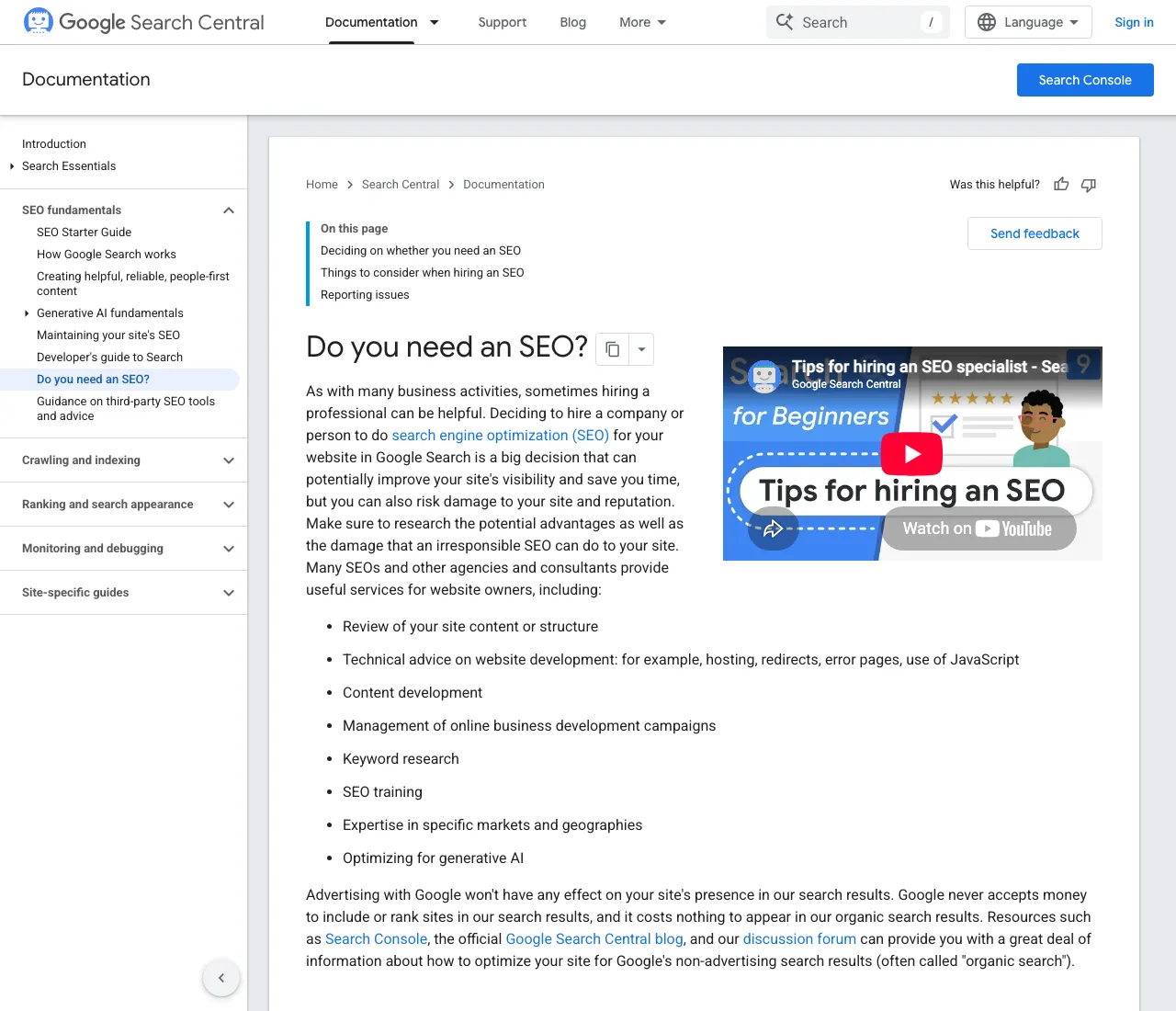
Google’s own hiring guide. “Optimizing for generative AI” sits right in the list of legitimate SEO services, & the last paragraph states nobody can buy a ranking. Source: developers.google.com.
What You Should Aim For Now Instead
With the admission price unchanged, the target widens: if AI answers are handling some of your questions before a visitor ever reaches your site, add a second one, getting cited inside the answer. The same content earns both, because the generative features run on the systems that already decide who ranks (Google).
So watch more than the click count. Watch brand mentions, searches for your business name, and whether your pages are turning up inside AI answers. Track the calls, the form fills, & the people who walk in, because those are the numbers that tell you the work reached somebody.
For local businesses the practical work sits where it has sat all along: the card that pops up when someone searches your name, your reviews, and your service pages. The signal you send Google is the signal its AI reads, so the trust you build brings the clicks with it.
How to Spot SEO Advice That Will Get You in Trouble
A lot of the advice going around right now sells something other than that trust, partly because “SEO is dead” gave people cover to sell you something new instead of doing the work.
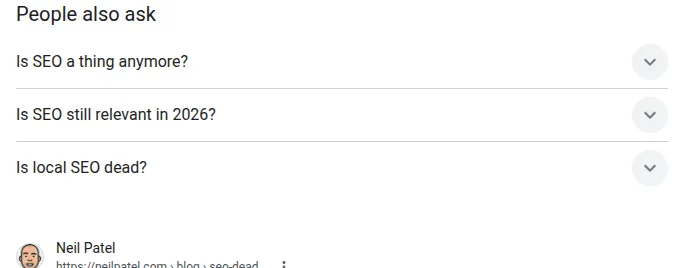
The real results page for “is seo dead”, captured the day this was written. Business owners are asking Google this in every phrasing they can think of, & that worry is exactly what the pitch feeds on. Source: Google search results.
The warning sign I’d check first is a guarantee. No one can guarantee a #1 ranking on Google, and Google says so in its own hiring guide (Google). Anyone promising you a first-page spot is promising something they don’t control.
Watch the pricing too. Full SEO work runs $1,000 to $2,500 a month on average, and hourly help averages $50 to $100 (Backlinko), which is the range I walked through in what SEO actually costs. A quote far under that usually means the work is heading overseas, where US prices run three to five times higher (Backlinko), or the deliverables are thin.
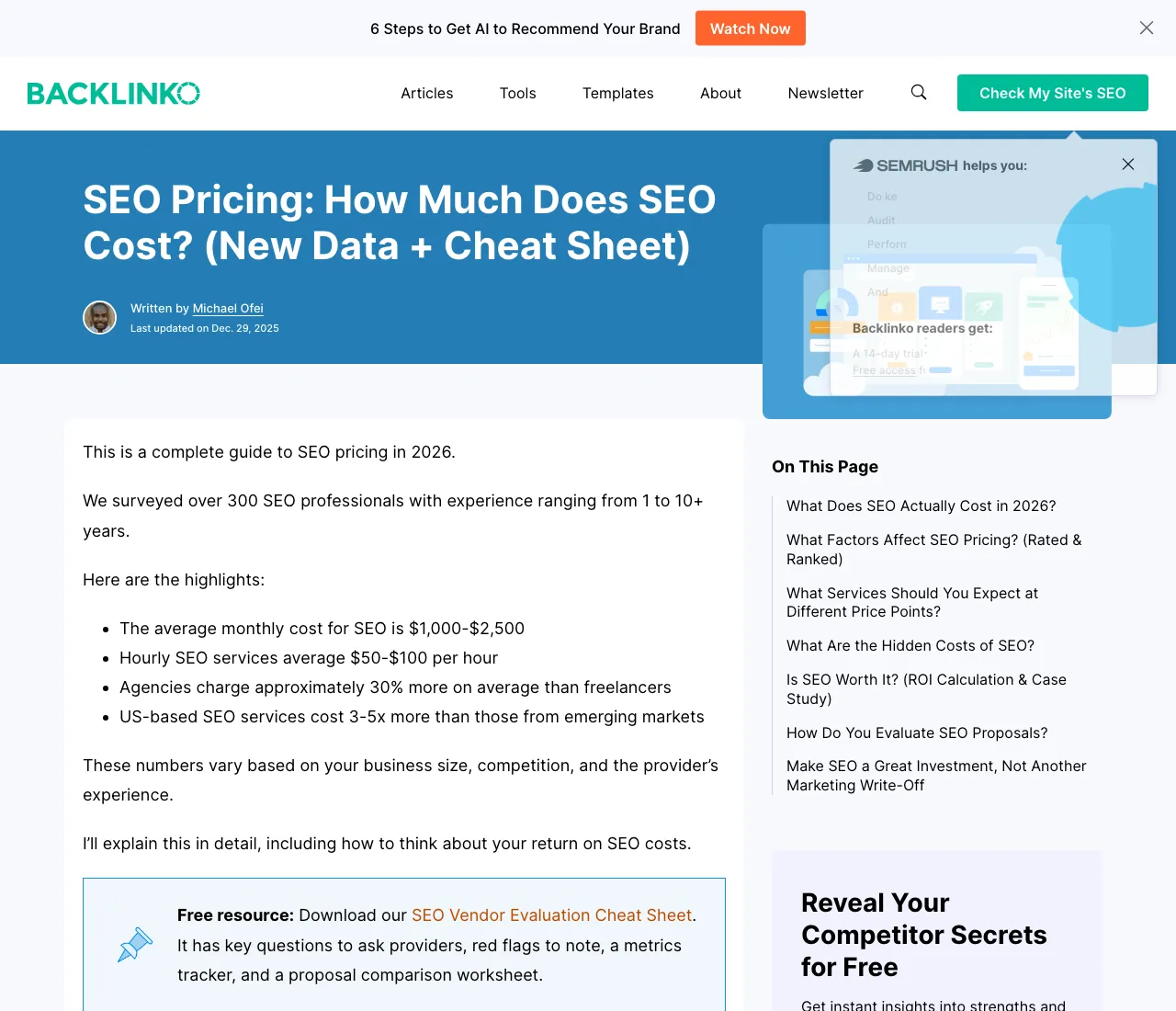
The survey behind the numbers above. The highlights box is the whole pricing story in four lines. Source: backlinko.com.
Asking what they do is the last check. Google’s guide says a legitimate SEO reviews your site content and structure, gives technical advice on development, develops content, and does keyword research (Google). If the answer comes back vague, keep looking.
The Bottom Line: Evolve or Quit
My answer is to keep investing.
AI Overviews take a real bite out of certain searches, and pretending otherwise doesn’t help. The signals those features run on are the same ones that have always decided who shows up (Google), so your rankings still feed the machine even when the machine answers before anyone clicks.
What changed is what counts as a win. A click used to be the only one, and now a citation inside an AI answer, a mention in the local pack, and a call from someone who skipped your site entirely count too.
The cost question is real. Full-service SEO averaging $1,000 to $2,500 per month (Backlinko) is a serious line item for a small operation, while appearing in Google’s organic results costs nothing (Google). You’re paying for the work, and the access is free.
If the fundamentals were skipped from the start, quitting is fair; if they were there, evolving them is the move. An hour spent learning which one you are is worth more than the next dollar.
If you’d rather someone tell you which one you’re in, that’s a consultation: $125 for the hour, & you leave with the list whether or not you hire me afterward. The whole service is outlined at St. Louis SEO consultant, prices posted.
I hope this helps.